ByJohn A
Understanding Cooling Tower Systems for Better Industrial Performance
Industrial cooling systems are essential for maintaining stable operating temperatures in manufacturing plants, commercial buildings, power generation facilities, and processing industries. These systems remove excess heat from equipment and processes, helping businesses maintain productivity, protect machinery, and control operating costs.
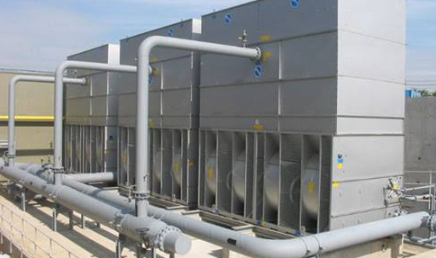
A cooling tower may appear to be a single piece of equipment, but its performance depends on several interconnected mechanical and structural elements. Fans move air through the system, water distribution assemblies spread heated water across heat-transfer surfaces, and drift eliminators help limit the loss of water droplets. Each element contributes to the overall efficiency and reliability of the installation.
Understanding how these parts function together helps maintenance teams identify problems, plan inspections, and make informed decisions when repairing or upgrading equipment. It also allows purchasing teams to select compatible components that meet the requirements of their particular cooling system.
How Industrial Cooling Towers Work
Cooling towers remove heat from circulating water through contact with air. Warm water enters the tower and is distributed over internal heat-transfer surfaces. Air moves through the equipment, allowing a portion of the water to evaporate and carry heat away. The remaining cooled water collects in a basin before returning to the industrial process or cooling circuit.
The system must maintain a suitable balance between airflow, water distribution, heat-transfer surface area, and operating conditions. If one element performs poorly, the efficiency of the entire tower may decline.
For example, insufficient airflow can reduce heat removal, while blocked spray nozzles may prevent water from reaching the fill evenly. Damaged drift eliminators can increase water loss, and deteriorated structural components may create additional maintenance or safety concerns.
Regular inspection is therefore important, even when the cooling tower appears to be operating normally.
Essential Components and Their Functions
1. Fan and Drive Assembly
The fan provides the airflow needed to support heat transfer. Depending on the design, the system may use an induced-draft or forced-draft arrangement. The fan may be driven directly by an electric motor or through additional components such as a gearbox, shaft, coupling, or belt drive.
Reliable fan operation depends on blade condition, correct alignment, secure fasteners, and suitable motor performance. Excessive vibration, unusual noise, or changes in electricity consumption may indicate a developing mechanical problem.
Maintenance personnel should inspect the fan assembly according to the manufacturer’s recommendations. Damaged blades, worn bearings, loose connections, and alignment issues should be assessed before they cause more extensive damage.
Replacement components must match the original equipment specifications. A fan with unsuitable dimensions or operating characteristics can affect airflow, energy consumption, and mechanical loading.
2. Water Distribution System
The water distribution system carries heated water to the areas where heat exchange takes place. Depending on the cooling tower design, this arrangement may include spray nozzles, distribution branches, manifolds, piping, basins, or orifice plates.
Uniform water distribution helps ensure that the available heat-transfer surfaces are used effectively. When nozzles become blocked or distribution pipes develop leaks, some areas may receive too little water while others receive excessive flow.
These problems can reduce cooling efficiency and contribute to mineral deposits or fouling. Routine inspections should check for obstructions, leaks, damaged fittings, and uneven spray patterns.
Water distribution components should also be compatible with the system’s operating pressure, water chemistry, and temperature. Selecting suitable materials can help reduce premature deterioration and unnecessary repair work.
3. Fill Media and Heat-Transfer Surfaces
Fill media increases the surface area available for contact between water and air. This helps improve heat transfer and supports the evaporation process.
Cooling towers may use film fill, which spreads water into thin layers, or splash fill, which breaks the water into smaller droplets. The appropriate configuration depends on the equipment design, water quality, and operating conditions.
Over time, fill media may accumulate scale, dirt, suspended solids, or biological deposits. Physical deterioration can also reduce its effectiveness. Restricted passages may interfere with airflow, while uneven water distribution can create areas that contribute less effectively to cooling.
Maintenance teams should inspect fill media for blockage, deformation, and excessive deposits. Cleaning methods must be appropriate for the material because aggressive pressure washing or unsuitable chemicals can damage internal surfaces.
4. Drift Eliminators
Drift eliminators capture liquid water droplets carried by the airflow before they leave the tower. Their main purpose is to reduce water loss and limit the release of droplets containing circulating-water treatment chemicals.
Damaged, incorrectly installed, or obstructed eliminators may allow excessive drift. Missing sections and gaps can also reduce their effectiveness.
Inspection should focus on the physical condition, positioning, cleanliness, and security of the assemblies. Replacement parts should fit the intended configuration and be installed according to the manufacturer’s instructions.
Drift eliminators are particularly important for water management because excessive drift can increase makeup-water demand and contribute to unwanted water deposition around the installation.
5. Air Inlet Louvers and Structural Housing
Air inlet louvers help guide air into the tower and, in many designs, limit water splash-out. Their performance depends on correct installation, unobstructed openings, and suitable structural condition.
Dirt, debris, damaged panels, or blocked air passages can restrict airflow and reduce cooling performance. Maintenance teams should examine louvers, casing panels, support frames, and fasteners for damage or corrosion.
The cold-water basin is another important structural element. It collects cooled water before that water returns to the process. The basin should be checked for leaks, sediment, debris, and deterioration that could affect water quality or structural integrity.
Access platforms, ladders, handrails, and other supporting structures also require regular inspection because their condition directly affects maintenance safety.
Selecting Compatible Replacement Parts
Choosing replacement parts requires more than finding a component that looks similar to the original. Dimensions, materials, mounting arrangements, operating speed, water conditions, and manufacturer specifications can all affect compatibility.
When reviewing BAC tower components maintenance teams should identify the cooling tower model and serial number wherever possible. Original part references, equipment drawings, photographs, and measurements can provide additional information during the identification process.
For mechanical components, specifications such as motor power, shaft dimensions, rotational speed, and mounting details may be essential. For water distribution assemblies, connection sizes, nozzle types, and flow requirements should be verified. Fill media and drift eliminators must match the intended arrangement and operating conditions.
If the original component reference is unavailable, compatibility should be confirmed with a qualified technician or equipment supplier before ordering. Unverified substitutions can create installation difficulties, reduce performance, or increase the risk of premature failure.
Purchasing teams should also consider the availability of future replacements. Clear documentation and accurate part records can make subsequent maintenance easier and help avoid repeated identification problems.
Common Signs That Maintenance Is Needed
Cooling tower problems often develop gradually rather than appearing as sudden failures. Monitoring operating conditions helps maintenance teams identify changes before they lead to serious disruption.
Several warning signs deserve attention:
- Reduced cooling performance: The system may struggle to achieve its expected cold-water temperature.
- Unusual vibration or noise: These symptoms may indicate problems with fans, bearings, drives, or loose mechanical connections.
- Uneven water distribution: Blocked nozzles or damaged piping can prevent water from reaching the fill uniformly.
- Increased water consumption: Excessive drift, leakage, or poor control of blowdown may contribute to higher makeup-water demand.
- Visible deposits or fouling: Scale, debris, and biological growth can restrict airflow or interfere with heat transfer.
- Repeated component failures: Frequent repairs may indicate an underlying installation, material, or operating problem.
Before replacing a part, maintenance teams should investigate the cause of the symptom. Correcting the underlying issue is often more effective than repeatedly replacing components that fail under the same conditions.
Preventive Maintenance and Water Management
A preventive maintenance program helps maintain cooling performance and reduce unexpected downtime. The schedule should reflect equipment design, operating hours, water quality, environmental exposure, and the manufacturer’s recommendations.
Routine activities may include inspecting fans and motors, checking water distribution patterns, cleaning basins, examining fill media, and confirming that drift eliminators remain correctly positioned. Structural components and access equipment should also be inspected for damage or deterioration.
Water treatment is equally important. As water evaporates, dissolved minerals become more concentrated in the circulating system. Without suitable controls, scale and corrosion may develop, while suspended solids can obstruct distribution components.
An appropriate treatment program may include filtration, chemical treatment, conductivity monitoring, and controlled blowdown. Cooling towers can also support the growth of microorganisms, including Legionella, when water management is inadequate. Facility operators should follow applicable public-health requirements and maintain a documented water-management program.
Cleaning and maintenance activities should be performed using suitable safety procedures. Fans, pumps, and other hazardous equipment must be isolated before intrusive work begins, and workers should use appropriate protective equipment and safe access arrangements.
Managing Spare Parts and Operating Costs
Maintaining a sensible inventory of critical spare parts can reduce repair delays. However, stocking every possible component may tie up capital and create storage problems.
Businesses should prioritise parts according to their importance, failure likelihood, procurement lead time, and potential effect on production. Components that could stop the entire cooling system may deserve priority over items that are easy to obtain and replace.
When comparing suppliers, purchasing teams should assess technical compatibility, material quality, delivery schedules, warranty terms, and access to technical support. A lower initial price may not provide the best long-term value if a component wears quickly or causes additional maintenance demands.
Maintenance records can support better inventory decisions by identifying frequently replaced items and revealing patterns in component failures. Accurate documentation also helps staff order the correct parts when future repairs are required.
Frequently Asked Questions
1. Which components have the greatest effect on cooling tower performance?
Fans, water distribution assemblies, fill media, and drift eliminators have important roles in airflow, heat transfer, and water retention. Structural components and the cold-water basin also support reliable operation and safe maintenance.
2. How can maintenance teams confirm that a replacement part is compatible?
Teams should verify the equipment model, serial number, original part reference, dimensions, material requirements, and operating specifications. When documentation is incomplete, compatibility should be confirmed with a qualified technician or the equipment supplier.
3. How often should cooling tower components be inspected?
Inspection frequency depends on the tower design, operating conditions, water quality, and manufacturer’s guidance. Regular visual checks should be supported by scheduled preventive maintenance and a suitable water-management program.
Conclusion
Industrial cooling towers depend on several components working together to remove heat reliably. Fans, drive assemblies, water distribution systems, fill media, drift eliminators, and structural elements each contribute to overall performance.
Understanding their functions makes it easier to recognise warning signs, select compatible replacement parts, and plan effective maintenance. By combining regular inspections, appropriate water treatment, accurate component identification, and sensible spare-parts management, facilities can reduce avoidable downtime and support more consistent cooling performance over the equipment’s service life.